


Apples
Aim to harvest all remaining apples by about the middle of the month. Check them carefully for any signs of damage, discard the rejects, and bring the rest indoors for storage.

Late-season apples such as this heritage ‘Roxbury Russet’ should store until well into the new year if the conditions are right.
Aubergines
You may get a late crop of aubergines from plants grown under cover. Outdoor plants should have been harvested last month.
Beetroot
Finish lifting any remaining beets this month, before they become too large and woody to be appetizing.
Broccoli
October is probably the last month for calabrese, although sprouting broccoli may continue cropping until later in the year.
Brussels sprouts
Start harvesting at the base of the stalks and work your way upwards.
Cabbages
Harvest autumn cabbages this month and next. Keep nets in place until you’ve lifted them all.
Cape gooseberries
Leave the berries for as long as you can: they’ll get sweeter the longer they remain on the plants. However, be sure to harvest them all before the first frost.

‘Brigitta’, ‘Chandler’, and ‘Ozark Blue’ are varieties that should still be cropping in September.
Carrots
Continue pulling maincrop carrots or, if they’re not being attacked by slugs, leave in the ground for later in winter.
Cauliflowers
Continue cutting autumn cauliflowers. The heads will keep longer if you leave some outer leaves in place.
Celeriac
The swollen stems will be reaching full-size and can be harvested any time now. Pick off the outer leaves to keep the crowns clear and reduce the risk of slug damage.
Celery
Harvest self-blanching or green celery before the arrival of the first winter frosts.
Chicory
Harvest any remaining red or sugarloaf chicory now – unless you have hardy winter varieties that you’re growing on in a cold frame, or under cover.
Chillies and peppers
You may have a few left to pick if the autumn has been warm, or if you’ve grown them under cover.
Courgettes and summer squash
Harvest any remaining crops early this month – they won’t survive a frost.
Cranberries
You can pick cranberries this month if they are beginning to ripen, or they may be left until they are all ripe and then harvested together in one go.

‘Brigitta’, ‘Chandler’, and ‘Ozark Blue’ are varieties that should still be cropping in September.
Endive
Harvest broad-leaved (or Batavian) and frisée endives throughout autumn and winter, provided your plants are covered with fleece or cloches as the weather turns colder.
Florence fennel
Fennel can withstand light frosts, but use cloches to protect your last bulbs.
French beans
Harvest beans left for drying this month. Strip them from their pods and store them in airtight containers.
Grapes
Traditionally, mid-season varieties are harvested in the middle of the month, and late-season varieties at the end, but let the weather dictate. If summer and autumn have been hot and sunny, grapes will be ready for picking earlier. If not, then leave them on the vine as long as possible.
Kohl rabi
Crops grown from seed sown in the summer should be ready to harvest now.
Leaf beets
Continue harvesting both Swiss chard and spinach beet leaves.
Leeks
Harvest leeks just before you require them, and earth up any that remain in the ground.
Lettuces
Autumn lettuces grown from seed sown in midsummer can be harvested now, although they may need protecting with fleece or cloches.
Marrows
If you harden off their skins, you can store vegetable marrows for a couple of months – but they’re better eaten fresh.
Melons
Harvest any remaining late-season melons grown under cover now.
Oriental leaves
Leaves such as the loose-headed Chinese cabbage shown here will continue cropping for a while, but may need covering with cloches or frames.
Parsnips
Traditionally, parsnips are not lifted until after a couple of frosts have concentrated and improved their flavour.
Pears
Most will have been harvested or blown off the tree by now, but pick any pears that are still holding on. Inspect them meticulously and be ruthless if any are damaged or evenly slightly bruised. They will rot if you try to store them.
Peas
Harvest any remaining peas before the arrival of the first frosts.
Plums, damsons, and gages
October is too late for ordinary plums but not for some of the late-ripening, less familiar damsons and bullaces.

Damsons have blue-black skin and a characteristic bloom. Don’t squeeze or touch them if you want them to retain their perfect complexion!
Pumpkins and winter squash
Harvest this month. Cure them in the sun to harden the skins, and bring the fruits indoors before the first frosts.
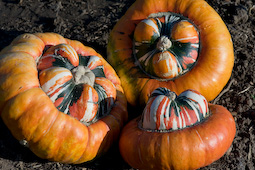
A batch of exotic ‘Turk’s Turban’ squashes drying out ready for winter storage.
Radishes
There may still be a few salad radishes waiting to be harvested from late summer sowings.
Raspberries
Autumn-fruiting raspberries should go on cropping until the arrival of the first serious frosts.
Runner beans
Harvest any remaining runner beans.
Salad leaves
Land cress, corn salad, rocket, and most of the Oriental brassicas are still a valuable source of leaves for salads. Cover them at night, if necessary.
Spinach
Fast-growing, autumn varieties sown in late summer should be cropping now.
Strawberries
Pick the last of the year’s perpetual strawberries. They won’t survive a frost.
Swede
Swedes should be at their best during this month and next.
Sweet potatoes
Dig up any remaining sweet potatoes this month. They’ll be attacked by slugs if they stay in the ground much longer. They will keep indoors for a while if they’re dried in the sun – like pumpkins and squashes.
Tomatoes
Late-ripening tomatoes can be left outside if they’re under cloches or fleece, but really this is the end of the season: they won’t survive a frost. It’s better to bring in any remaining fruit and attempt to ripen it indoors.
Turnips
You can leave turnips in the ground for a few more months yet, but lift and eat them before they become too large.
Winter radishes
Hardy autumn and winter radishes sown in the summer will be ready to lift now.
Vegetables
Aubergines
Beetroot
Broccoli
Brussels sprouts
Cabbages
Carrots
Cauliflowers
Celeriac
Chillies and peppers
Courgettes
Florence fennel
French beans
Kohl rabi
Leaf beets
Leeks
Marrows
Oriental leaves
Parsnips
Peas
Pumpkins
Runner beans
Spinach
Summer squash
Swede
Sweet potatoes
Swiss chard
Turnips
Winter radishes
Winter squash
Salads
Celery
Chicory
Endives
Lettuces
Salad leaves
Tomatoes
Fruit
Apples
Cape gooseberries
Cranberries
Grapes
Melons
Pears
Plums
Raspberries
Strawberries
Text and photographs copyright © 2010 Alan Buckingham.
 Allotment Month by Month
(Dorling Kindersley, 2009)
 Grow Vegetables
(Dorling Kindersley, 2007)
 Grow Fruit
(Dorling Kindersley, 2010)