


Broad beans
You should get an early crop of broad beans this month if you planted seeds the preceding autumn or sowed some at the start of the new year under cover or indoors. Pick the pods when they’re still small, and when the beans are at their sweetest.
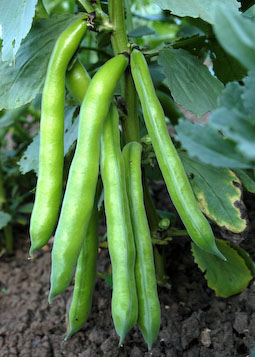
‘Aquadulce Claudia’ is a long-term, tried-and-tested favourite for autumn sowing.
Asparagus
Cut asparagus regularly, before the spears grow too thick and woody. Traditionally, harvesting is supposed to stop on 21st June, the longest day of the year, but there’s no harm in continuing for a while longer if you’ve still got tender, tasty spears.
Beetroot
Harvest your first beetroot of the year, picking them when they are no larger than golf balls to catch them at their most tender and tastiest. You can eat the leaves in salads or stir-fries, too.
Broccoli
Both calabrese and summer sprouting broccoli should be ready for harvesting this month. Cut the heads or shoots when they are firm and the flowers tightly budded.
Carrots
If you sowed an early variety in March or April, you should be able to pull your first carrots of the year this month. Small, baby carrots are wonderful in salads and need only the briefest cooking for stir-fries.
Lettuces
Small, crisp, mini-cos lettuces like this ‘Little Gem’ type grow swiftly and should be ready to harvest if sown indoors in March, or under cover in April.
Onions
June is the month to start harvesting overwintered Japanese onions grown from sets you planted outdoors the previous autumn. It’s also the month for “competition” onions – those lovingly raised from seeds sown indoors at the beginning of the year.
Peas
The first peas of the year are always the sweetest and tastiest. Pick them while they’re still young and, if you can, eat them immediately, before their sugars turn to starch.
Potatoes
Lifting your first new potatoes of the year is always a rewarding moment. First early varieties such as ‘Accent’, ‘Annabel’, ‘Red Duke of York’, and ‘Concorde’ should be ready in June – at around 100–110 days after planting, depending of course on the weather and other growing factors.
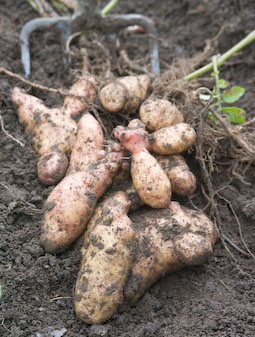
As a rule of thumb, “earlies” should be ready to lift 100-110 days after planting.
Radishes
With careful planning and successive sowing you should be able to provide a supply of radishes almost all year round. You should get a June crop from sowings in late April or early May.
Rhubarb
Continue picking sticks of rhubarb. There should be another month or two before the period for harvesting comes to an end.
Strawberries
June is strawberry month. Few things signal midsummer’s day more perfectly than a bowl of strawberries and cream. Check plants daily so you can pick the berries when they are perfectly ripe and at their sweetest and juiciest.
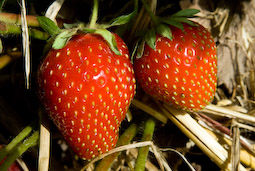
For eating fresh, try to catch ripening strawberries at the point where they have turned completely red but before they begin to go soft.
Salad leaves
Harvest young leaves of peppery mizuna and ‘Red Russian’ kale and mix with other leaves, such as rocket, for a tasty and unusual summer salad.
Spinach
Harvest spinach leaves regularly and keep plants very well watered to discourage them from bolting as summer arrives and temperatures rise.
Spring onions
Spring onions can be harvested during most months of the year, although June may be the first month for seeds sown in the spring. For earlier crops, raise them indoors.
Swiss chard/spinach beet
Like spinach, Swiss chard can be harvested throughout the summer – as long as it doesn’t bolt. When the leaves are young they can be eaten raw as a cut-and-come-again salad; when larger they can be cooked.
Turnips
Many modern turnip varieties are fast-growing and will be ready to harvest just five or six weeks after sowing seeds. At that stage, the roots may be no bigger than golf balls – but they’ll be at their sweetest and nuttiest.
Cauliflowers
Early summer cauliflowers – if planted out in March – should be ready for picking now. Catch them while the heads are firm, before they bolt.
Cherries
July is really the key month for cherries but if weather conditions have been favourable a few early varieties may be ready for picking in June.
Florence fennel
June is likely to be the first month of the year for fennel. Small, young bulbs can be eaten raw in salads; larger ones may be better cooked.
Garlic
Continue harvesting garlic as it becomes ready – either pulling the bulbs when they are fresh or “green” and using them straight away, or waiting till the leaves turn yellow and then drying out the bulbs in preparation for storage.
Globe artichokes
Young, tightly budded globes can be cooked and eaten whole. Leave them to grow larger and they’re best boiled or steamed then picked apart for their soft, fleshy leaves and for the heart that lies hidden at the centre.
Gooseberries
In June pick alternate fruits as a way of thinning out the crop. Use those you pick this month for cooking, as they may not yet be quite ripe. And use the ones you pick next month for eating fresh, since they’ll be fully ripened and therefore sweeter.
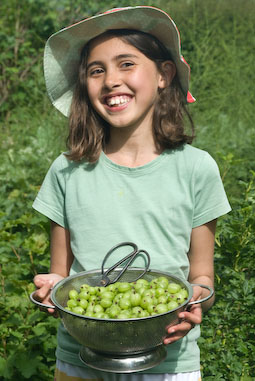
Gooseberries keep in the fridge for up to ten days or more. They also freeze well.
Kohl rabi
The first of the fastest growing varieties should be ready to harvest in June. To eat raw in summer salads pick them when they are about the size of a golf ball.
Vegetables
Aubergines
Beetroot
Broad beans
Broccoli
Carrots
Cauliflowers
Florence fennel
Garlic
Globe artichokes
Kohl rabi
Onions
Peas
Potatoes
Rhubarb
Spinach
Swiss chard
Turnips
Salads
Lettuces
Radishes
Salad leaves
Spring onions
Fruit
Cherries
Gooseberries
Strawberries
Text and photographs copyright © 2010 Alan Buckingham.
 Allotment Month by Month
(Dorling Kindersley, 2009)
 Grow Vegetables
(Dorling Kindersley, 2007)
 Grow Fruit
(Dorling Kindersley, 2010)